
Understanding Wet Floor Signs: DFS Best Practices for Safety and Visibility
Introduction
In busy environments like airports, universities, and other public spaces, safety cannot be left to chance. Wet floor signs are among the simplest tools a facility team can use, but if used incorrectly, they can lose their effectiveness or even create new hazards.
At Diverse Facility Solutions (DFS), safety is built into our daily operations. Our teams focus on awareness, proper placement, and best practices to keep facilities organized, compliant, and injury free. This approach helps protect your guests and employees.
Why Proper Placement Matters
Proper signage placement is essential to effective risk management. A wet floor sign should warn people early and guide them safely around a hazard. Signs placed too close to the wet area, facing the wrong direction, or blocking walkways can create confusion instead of preventing incidents.
DFS teams are trained to view signage as part of overall traffic flow. The goal is to ensure visibility, allow safe movement, and support confidence in crowded or fast paced environments.
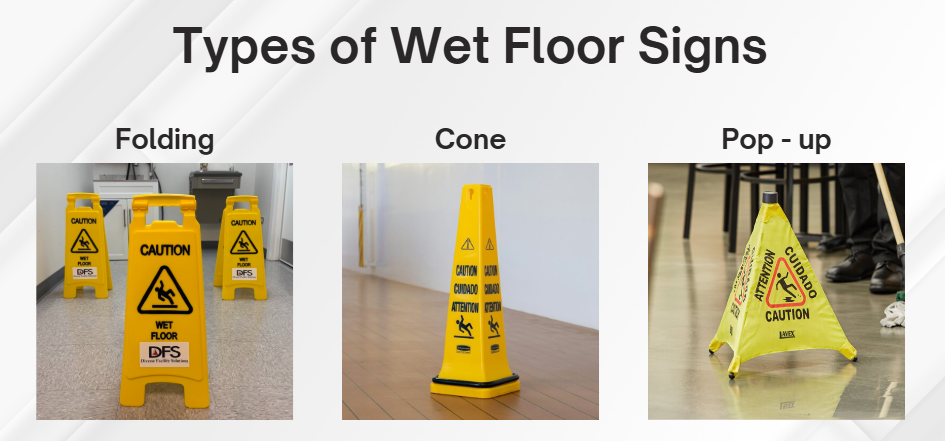
Our Three Sign Types
DFS trains teams to use the right tool for each situation.
| Sign Type | Key Features | Placement |
|---|---|---|
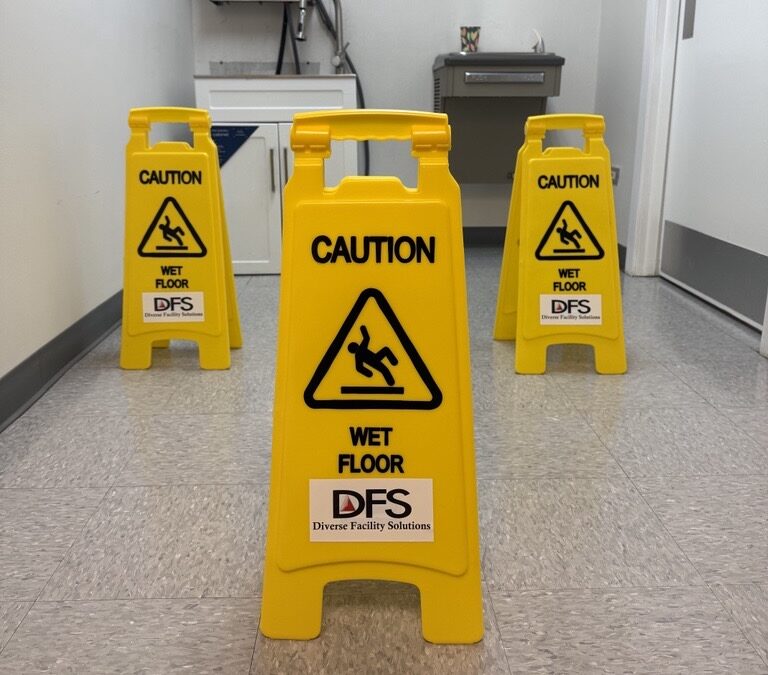
| Folding Signs | Standard A-frame design; most commonly used | Best for smaller, expected hazards such as around water fountains, restrooms, and contained spills in walkways |
| Cone-Style Signs | Taller, robust, and visible from all sides | Ideal for large open walkways, building entrances, and transition points such as the top and bottom of escalators or moving walkways |
| Pop-Up Signs | Stores flat and opens instantly | Perfect for rapid deployment during unexpected spills in high-traffic areas such as gate hold rooms or terminal walkways |
Best Practices: The DFS Standard
DFS teams follow clear guidelines to ensure each sign is used effectively:
-
Place Signs Before the Wet Area: Position the sign where people can see it early and react safely. It marks the start of the warning zone, not the hazard itself.
-
Select the Right Sign for the Situation: Choose the sign type based on the area, traffic flow, and urgency. Cone-style signs work well in busy open spaces, pop-up signs are ideal for quick deployment during unexpected hazards, and folding signs are perfect for smaller, routine spills.
-
Ensure Visibility: Keep signs in clear view at all times. Avoid hiding them behind equipment, carts, or corners. In long or open areas, use multiple signs so the hazard is visible from every direction.
-
Maintain Sign Integrity: Keep signs upright and stable. Replace damaged, faded, or dirty signs to maintain safety and a professional appearance.
Avoiding Sign Fatigue
One of the most important considerations for wet floor safety is the timely removal of signs. Leaving signs out after the floor is dry can create tripping hazards and lead to sign fatigue. When signs are used unnecessarily, people may stop paying attention, and a real hazard might be ignored.
At DFS, wet floor signs are used only for active hazards. Once an area is verified as clean and safe, the sign is removed immediately and returned to its proper storage location.
Conclusion
A successful safety program depends on consistent training and attention to detail. By choosing the right wet floor signs, placing them correctly, and removing them promptly, DFS helps reduce risk and maintain safer environments for employees, visitors, and everyone in your facility.